

Hair Protein: Does It Cause Cancer? The Facts
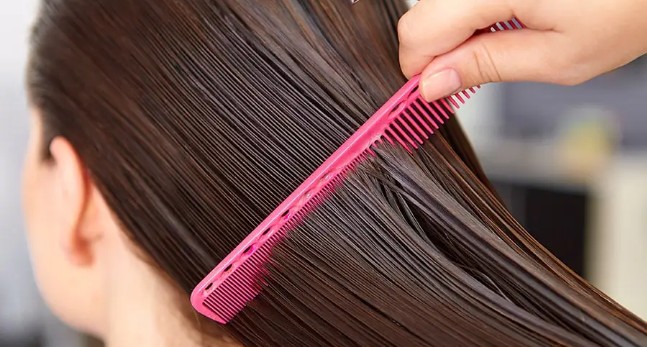
Hair Protein and Cancer: What’s the Truth?
For many people, hair-straightening (often marketed as keratin/protein treatments) seems like a quick route to smooth, shiny hair. In recent years, questions have been raised about the safety of certain ingredients, especially those that release formaldehyde when heated, and their possible link to some cancers. Current evidence is observational (associational) rather than definitive proof of causation, so it is prudent to minimize exposure and follow safety guidance.
Do protein/chemical straighteners cause cancer?
There is no conclusive proof of a direct cause–effect relationship. Large observational studies have reported that frequent use of chemical hair straighteners is associated with a higher risk of uterine cancer compared with non-users, while the absolute risk remains low. These findings are correlational and more research is needed to identify the responsible ingredients and mechanisms, if any.
Formaldehyde vs formalin
-
Formaldehyde: a strong-smelling gas classified as carcinogenic to humans.
- Formalin: an aqueous solution containing formaldehyde (often around 37%). During heat-based smoothing, some products can release formaldehyde gas, which can be inhaled.
How do some keratin/protein treatments release formaldehyde?
Many smoothing systems apply a solution and then use high-heat flat ironing to seal it. Heating can liberate formaldehyde gas; in poorly ventilated spaces, concentrations may exceed occupational limits and irritate the eyes, airways, and skin of clients and salon workers. Mislabeling has been reported in some cases (e.g., products marketed as "formaldehyde-free" that still release it when heated).
Other ingredients to avoid
- Sodium hydroxide (lye) is the active agent in many chemical relaxers and can cause scalp burns or irritation if misused, but it is not a core ingredient of keratin/protein smoothing systems, which rely more on heat and aldehyde chemistry. Avoid conflating the two categories.
- Parabens and phthalates may act as endocrine-active chemicals in some uses; human data on cancer risks are largely associational, not definitive.
Other potential harms (beyond cancer)
- Scalp and skin irritation or burns, particularly with strong alkaline relaxers or incorrect use.
- Respiratory symptoms (cough, breathlessness, eye and nose irritation) from formaldehyde vapors in inadequately ventilated salons.
Are “formaldehyde-free” options safer?
You can choose products labeled as free of formaldehyde, but some alternatives may still release small amounts or use other acids (such as glyoxylic acid) that carry their own, albeit rarer, risks. Treat these as potentially lower-risk for formaldehyde, not risk-free. Good ventilation and minimizing frequency remain essential.
Practical tips to reduce the risk
- Reduce frequency and choose reputable brands with clear labeling. Ask specifically about formaldehyde/formalin/methylene glycol and the heat step and avoid them.
- Ensure the procedure is done in a well-ventilated setting to reduce inhalation exposure. Salons should follow occupational safety standards.
- If you are pregnant or have respiratory conditions, the safer choice is to avoid these treatments.
Bottom line
Some hair straighteners show associations with certain risks in observational research, but causation is not established. The safest approach is to limit exposure, choose trustworthy products, prefer well-ventilated environments, and scrutinize ingredients, especially those that can release formaldehyde when heated.